

There’s a certain magic in the first bite of a perfectly crafted pavlova-the crisp, delicate shell giving way to a cloud-like interior, crowned wiht vibrant, freshly sliced fruits that burst with color and flavour. This iconic dessert, with its origins steeped in culinary lore and a touch of romance, has captured hearts and palates across the globe. In this article, we unravel the secrets behind pavlova perfection, exploring the history, the science, and the artistry that transform simple ingredients into a sublime fresh fruit dessert delight. Whether you’re a seasoned baker or a curious foodie, prepare to embark on a delectable journey that celebrates elegance, texture, and the fresh fruity flourish that makes pavlova truly unforgettable.
Pavlova Perfection: A Fresh Fruit Dessert Delight Explained
Pavlova perfection begins with the delicate dance of crisp, cloud-like meringue and vibrant, juicy fresh fruits-a symphony that dazzles both the eyes and the palate. Originating from the elegant homage to Russian ballerina Anna Pavlova, this iconic dessert is a celebration of lightness and freshness, perfect for every season. Whether for festive gatherings or a simple weekend indulgence, mastering pavlova perfection transforms kitchen novices into dessert virtuosos.
Prep and Cook Time
- Preparation: 20 minutes
- Baking: 1 hour 15 minutes
- Cooling: 1 hour (do not rush for best texture)
Yield
Serves 8-10 elegantly sized portions
Difficulty Level
Medium – Requires attention to technique but highly rewarding
Ingredients
- 4 large egg whites, at room temperature
- 1 cup (200g) caster sugar
- 1 tsp white vinegar
- 1 tbsp cornstarch (cornflour)
- 1 tsp vanilla extract
- 1 cup heavy cream, chilled
- 2 tbsp powdered sugar (for whipped cream)
- Assortment of fresh fruits: kiwi, strawberries, passion fruit pulp, blueberries, raspberries, and mango slices
instructions
- Preheat the oven to 250°F (120°C). Line a baking tray with parchment paper and draw a 9-inch circle as a guide.
- Beat the egg whites in a clean, dry bowl using an electric mixer on medium speed until soft peaks form. ensure no yolk contaminates the whites, as this hinders volume.
- Gradually add the caster sugar one tablespoon at a time, whipping on high speed until the meringue is glossy and stiff peaks form. Rub a bit between your fingers to check for sugar grit; it should dissolve completely.
- Gently fold in the white vinegar, cornstarch, and vanilla extract with a rubber spatula, preserving as much air as possible for that characteristic marshmallow center.
- Transfer meringue onto the parchment within the marked circle, shaping it with high edges and a slightly hollow center to cradle the cream and fruits later.
- Bake low and slow for approximately 1 hour 15 minutes. The outside should feel crisp and firm, but avoid browning. Turn off the oven and allow the pavlova to cool inside completely with the oven door slightly ajar. This prevents cracking from rapid temperature changes.
- Whip the cream and powdered sugar until soft peaks form just before serving to keep it fresh and luscious.
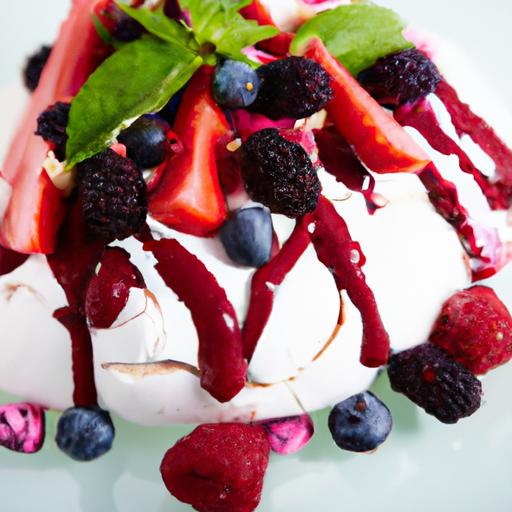
- Carefully spoon the whipped cream into the meringue’s center. Top generously with the carefully selected fresh fruits, arranging them to showcase vibrant colors and natural shapes.
Chef’s Notes: Tips for Pavlova Perfection
- Use room temperature egg whites to maximize volume and stability.
- Ensure bowls and beaters are spotless-any fat residue will prevent the whites from whipping properly.
- Low humidity days are best; moisture can cause your meringue to collapse or weep.
- For a tropical twist, substitute fruits with sliced starfruit, lychee, or passionfruit pulp for an exotic flair.
- Make the meringue a day ahead and store in an airtight container to keep crispness intact.
- avoid refrigeration of unassembled meringue, as moisture ruins the crunch.
Choosing the Juiciest Fresh Fruits for vibrant Flavors
The heart of pavlova perfection is the fresh fruit topper, where each bite bursts with seasonal vibrancy. Select fruits at their ripest-think ruby-red strawberries with a glossy sheen, kiwi lush and emerald-green, and blueberries firm but tender.The sweetness and acidity balance the meringue’s sugary crispness,so embrace diversity in your selection. Passionfruit or mango add tropical brightness, while raspberries provide that gentle tartness that contrasts delightfully with the cream and meringue.
Mastering the Balance Between Crispness and Softness
Pavlova perfection hinges on the paradoxical texture: an outer shell that shatters with a gentle tap and an ethereal, marshmallow-soft interior. Achieve this balance by slow baking at low temperatures, followed by gradual cooling. The vinegar and cornstarch are your trusted allies, stabilizing the meringue and producing that signature cloud-like softness within the crisp jacket. Resist the urge to peek or open the oven too early, as it can lead to cracks.also, avoid assembling the pavlova too soon; wait until just before serving so the moisture from the cream and fruit doesn’t weaken the crisp exterior.
Expert Tips for Stunning Presentation and Serving Suggestions
Plating pavlova perfection is an art form itself. Start by dolloping fresh whipped cream into the meringue’s inviting crater, allowing gentle peaks to form. artfully arrange the vibrant fruits atop, alternating colors and shapes to create an eye-catching mosaic. Add finishing touches like edible flowers, a light dusting of powdered sugar, or a drizzle of passionfruit syrup for a glossy finish. Serve pavlova on a pristine white plate to highlight its brilliant contrasts, with a fork and a small dessert spoon for elegance. Pair with a crisp, chilled sparkling wine or a refreshing herbal tea to elevate the experience.

| Nutritional Data (per serving) | Calories | Protein | Carbs | Fat |
|---|---|---|---|---|
| Pavlova with Fresh Fruit | 280 kcal | 3 g | 40 g | 10 g |
for more inspiration on meringue-based desserts, explore our Meringue Magic Techniques guide. Want to dive deeper into tropical fruit flavor pairings? This Specialty Produce database offers expert insights on selecting peak fruits worldwide.
Q&A
Q&A: Pavlova Perfection – A fresh Fruit Dessert Delight Explained
Q1: What exactly is a Pavlova?
A1: Picture a cloud of crisp, whisper-thin meringue with a marshmallow-soft center, crowned with a vibrant crown of fresh fruit and a dollop of whipped cream – that’s Pavlova. This iconic dessert combines airy sweetness with tropical tang, creating a symphony of textures and flavors that dance on your tongue.
Q2: Where did Pavlova originate?
A2: The pavlova’s roots trace back to the 1920s, inspired by the legendary Russian ballerina Anna Pavlova’s tour in Australasia. Both Australia and New Zealand claim her as their own, sparking a delightful debate, but what’s agreed upon is that this dessert was crafted to mirror her light, graceful presence.
Q3: What makes the Pavlova’s texture so unique?
A3: The magic lies in its meringue base. Whipping egg whites with sugar to stiff peaks traps air, creating a crust that bakes to crisp perfection while keeping the inside marshmallow-soft. The careful balance of vinegar or lemon juice and cornflour stabilizes the structure, giving Pavlova its signature airy silkiness.
Q4: Why is fresh fruit essential in Pavlova?
A4: Fresh fruit plays a starring role – its natural juiciness and bright acidity offer a refreshing contrast to the dessert’s sweet, creamy canvas. Seasonal berries, kiwi, passionfruit, or mangoes add vibrant colors and burst of flavor, transforming Pavlova into an edible celebration of freshness.Q5: Can Pavlova be made ahead of time?
A5: Yes, but with a little care! The meringue shell can be baked well in advance and stored in an airtight container to maintain crispness. However, fresh fruit and whipped cream are best added just before serving to keep everything looking and tasting pristine.
Q6: Any tips for baking the perfect Pavlova?
A6: Absolutely! Use room-temperature egg whites and ensure your mixing bowl is grease-free for maximum volume.Bake at a low temperature to dry out the meringue gently without browning. Resist the urge to open the oven door during baking – patience is your Pavlova’s best friend.Q7: How does Pavlova differ from other meringue desserts?
A7: Unlike French or Italian meringues frequently enough used as cake toppings or baked into cookies, Pavlova is a standalone dessert with a delicate balance: a crisp exterior, soft interior, rich cream, and fresh fruit. Its combination of textures and fruity freshness sets it apart as a true indulgence.
Q8: What occasions are perfect for serving Pavlova?
A8: From sunny summer barbecues to elegant dinner parties, Pavlova’s light and refreshing nature make it an ideal finale. It steals the show at festive holidays too, brightening tables with its colorful fruit and show-stopping presence.
Q9: Can Pavlova be adapted for dietary preferences?
A9: Certainly! You can make it gluten-free naturally, since it contains no flour. For a vegan twist, aquafaba (chickpea water) can substitute egg whites, tho it takes a bit more finesse. Fresh fruit toppings also lend themselves beautifully to various dietary needs.
Q10: In one sentence, why is Pavlova a dessert worth mastering?
A10: Because mastering Pavlova means crafting an edible masterpiece that’s as light and graceful as its namesake ballerina, bursting with fresh flavors and textures that mesmerize every palate.
In Conclusion
As the final meringue crumbles and the last jewel-toned berry is savored, Pavlova proves itself as more than just a dessert-it’s a canvas for creativity and a celebration of freshness. With its crisp exterior and pillowy heart,this iconic treat invites endless variations,each bite a harmonious dance of texture and flavor. Whether adorned with tangy kiwi, luscious passionfruit, or a medley of seasonal fruits, Pavlova remains a timeless symbol of indulgence and elegance.So next time you’re craving a sweet finale that dazzles the eye as much as the palate, remember: perfection is just a meringue away.